
An Italian private chef in Seattle, cooking the food of Rome
Nicholas Olson (Nico) is an Italian-American chef, born and trained in Rome. In Seattle he cooks the dishes Romans actually eat, in your kitchen, for a dinner of 2 to 10 or a celebration from 11 guests.
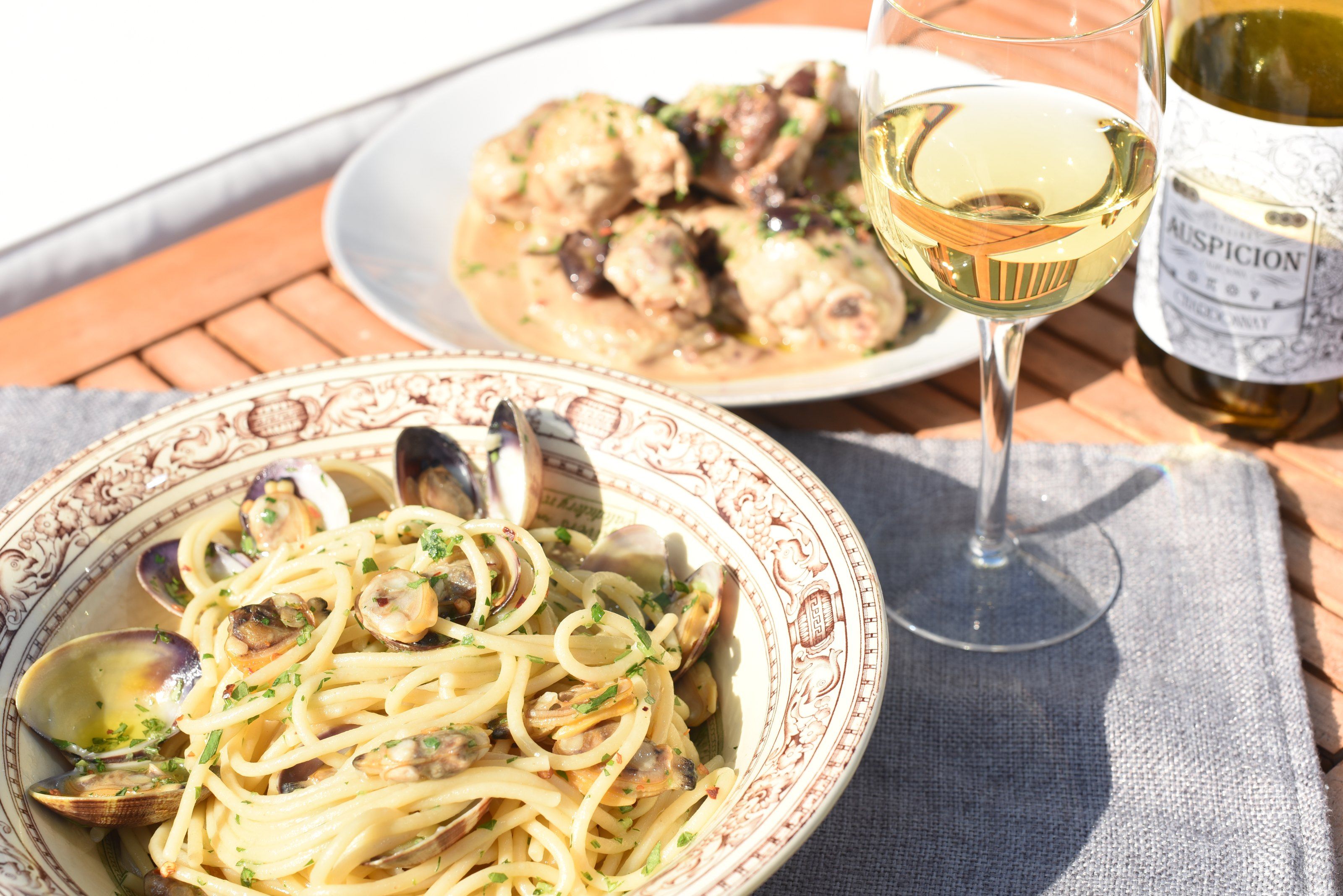
Spaghetti alle vongole
Spaghetti and clams, a Naples classic with a Puget Sound connection.
Pollo alla cacciatora
Hunter's-style chicken, the Roman way: wine and vinegar instead of tomato.
Roman cooking, not generic Italian
Roman food is the everyday cooking of Rome. Its best-known dishes are the four Roman pastas: cacio e pepe, carbonara, amatriciana and gricia.
Then come supplì, fried rice croquettes with mozzarella inside; slow braises like coda alla vaccinara; and vegetable sides dressed simply, with olive oil, garlic and chili.
Nico cooks it with seasonal ingredients from local vendors in the Pacific Northwest. On this year's menus the pasta for the amatriciana was made by hand, and the gnocchi were rolled by hand.
The dishes, and their stories
Every dish from this year's menus, and a few from our kitchen, course by course. Each story says where the dish comes from, Roman or not.
Antipasti
-
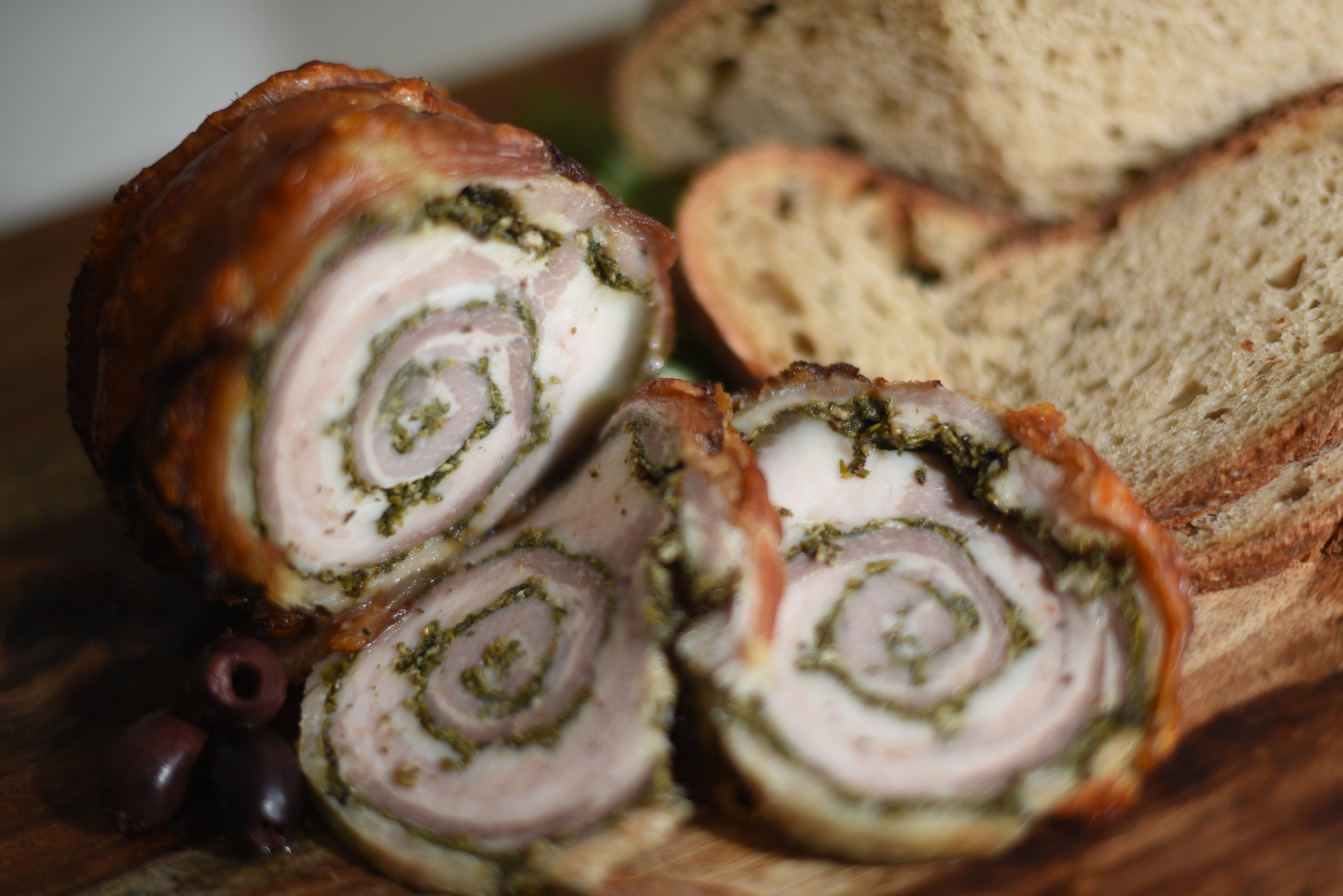
Porchetta
Herb-rolled roast pork
The best-known porchetta near Rome comes from Ariccia, in the hills south of the city, where a whole pig is boned by hand and seasoned with rosemary, garlic and pepper. Tradition says to eat it sliced and cold, with bread and local wine.
-
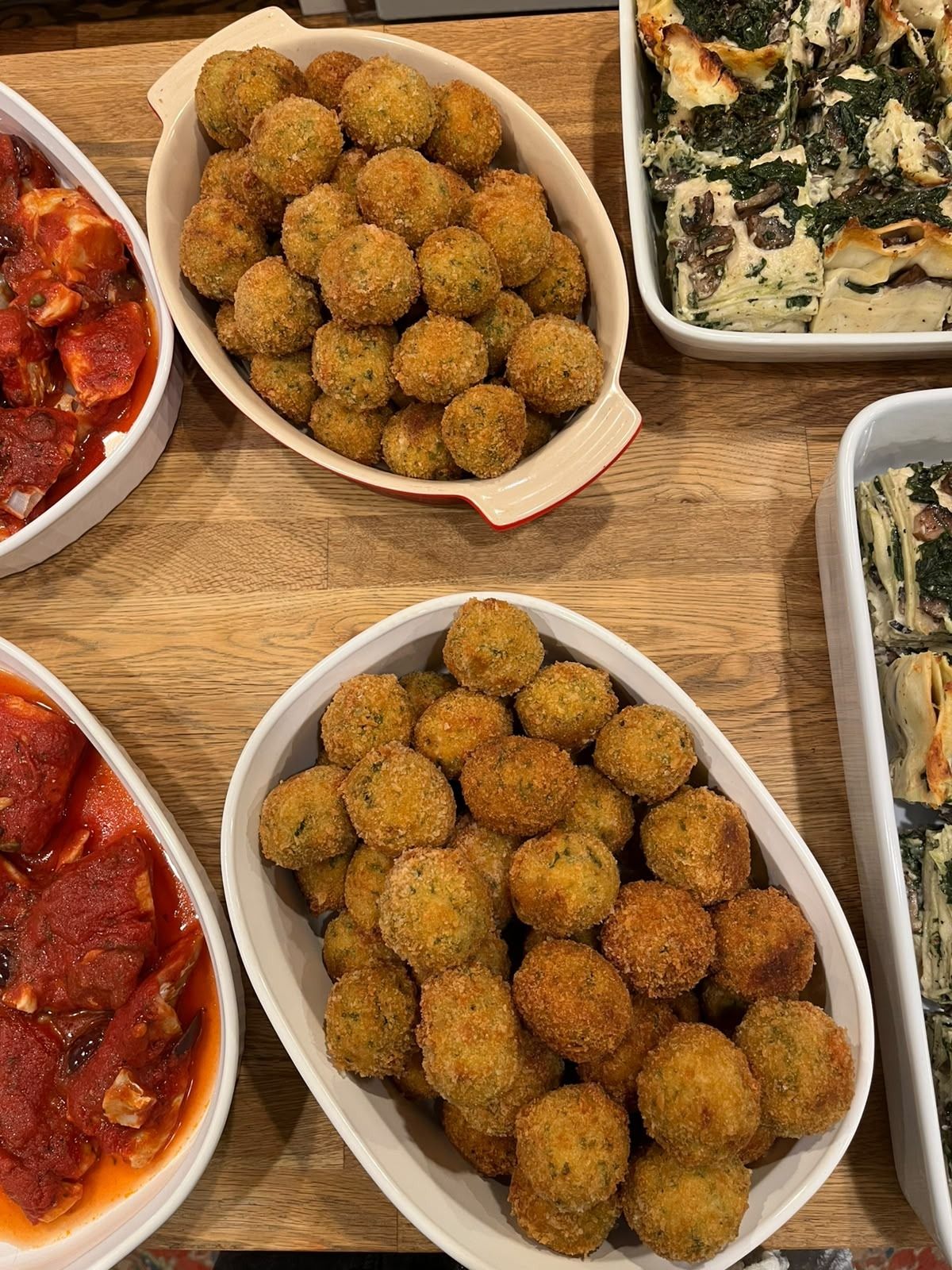
Polpette di pesce alle erbe
Herbed fish croquettes
A Roman cookbook more than 1,500 years old, known as Apicius, already shapes minced seafood into small cakes and fries them. It also has a green sauce for fowl, made with herbs, vinegar and honey, an early relative of Italy's salsa verde.
On the menu A birthday for twenty-four
-
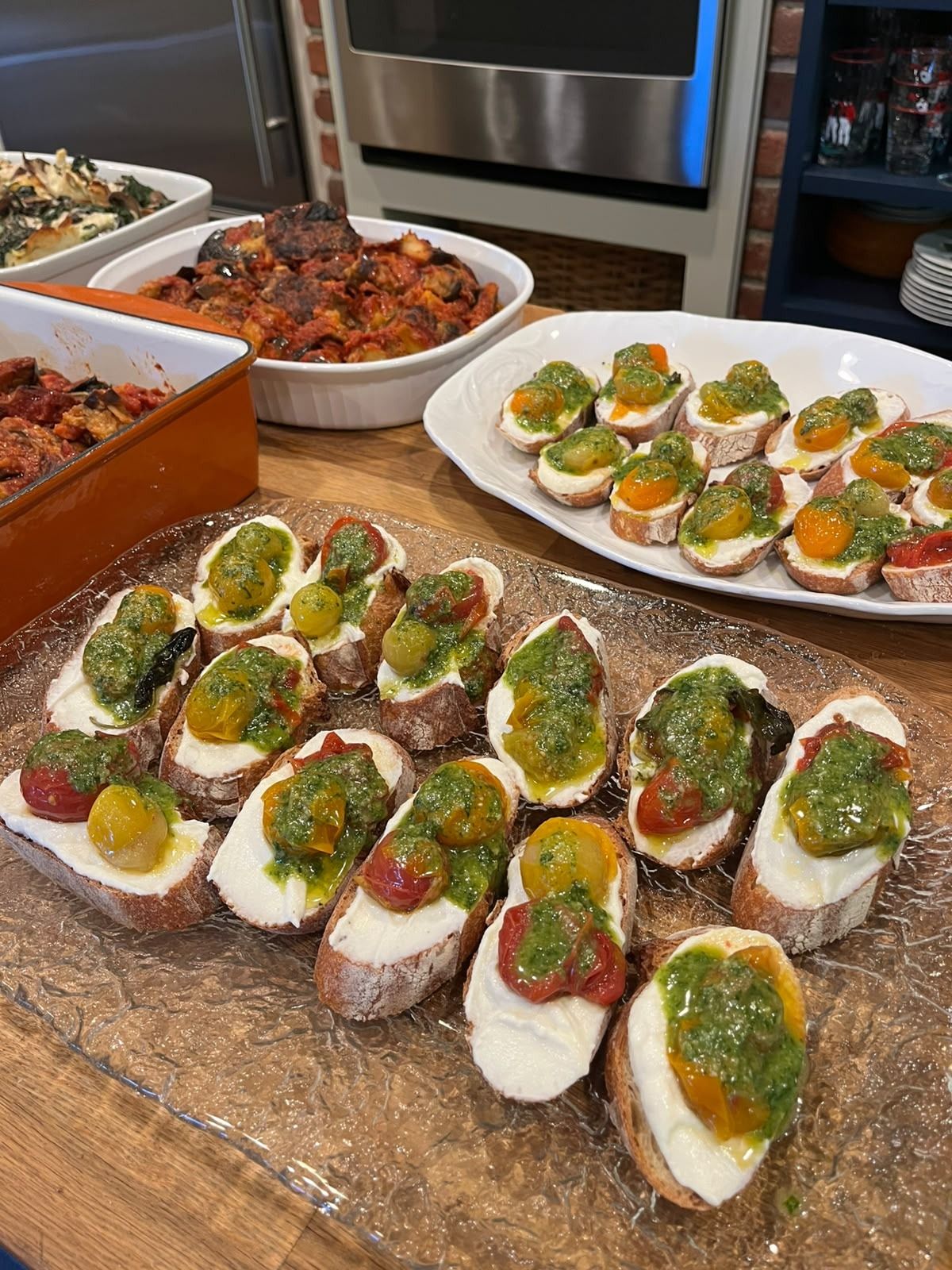
Crostini con ricotta
Crostini with whipped ricotta
Strictly speaking, ricotta is not a cheese: the name means recooked, because it is made by heating the whey left over from cheesemaking. Here it meets slow-roasted cherry tomatoes and basil pesto, a Genoese sauce named for the pounding of the mortar.
On the menu A birthday for twenty-four
-
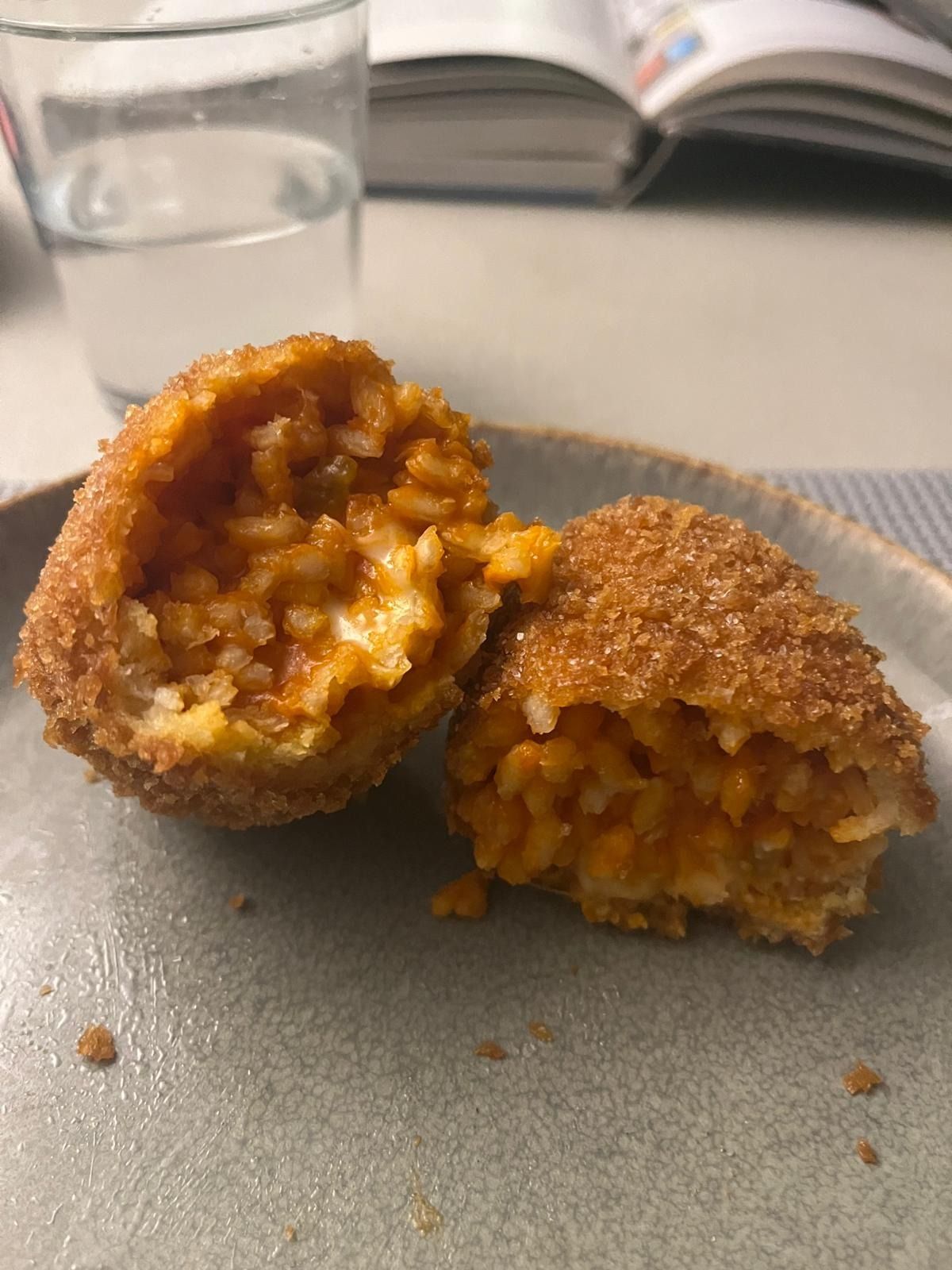
Supplì al telefono
Roman rice croquettes
The name supplì probably comes from the French surprise, and it first shows up in Rome in the 1800s. Eat one with your fingers while it is hot, pull it in two, and the mozzarella stretches out like a telephone cord.
On the menu A July housewarming for twenty, A September dinner for eight
-
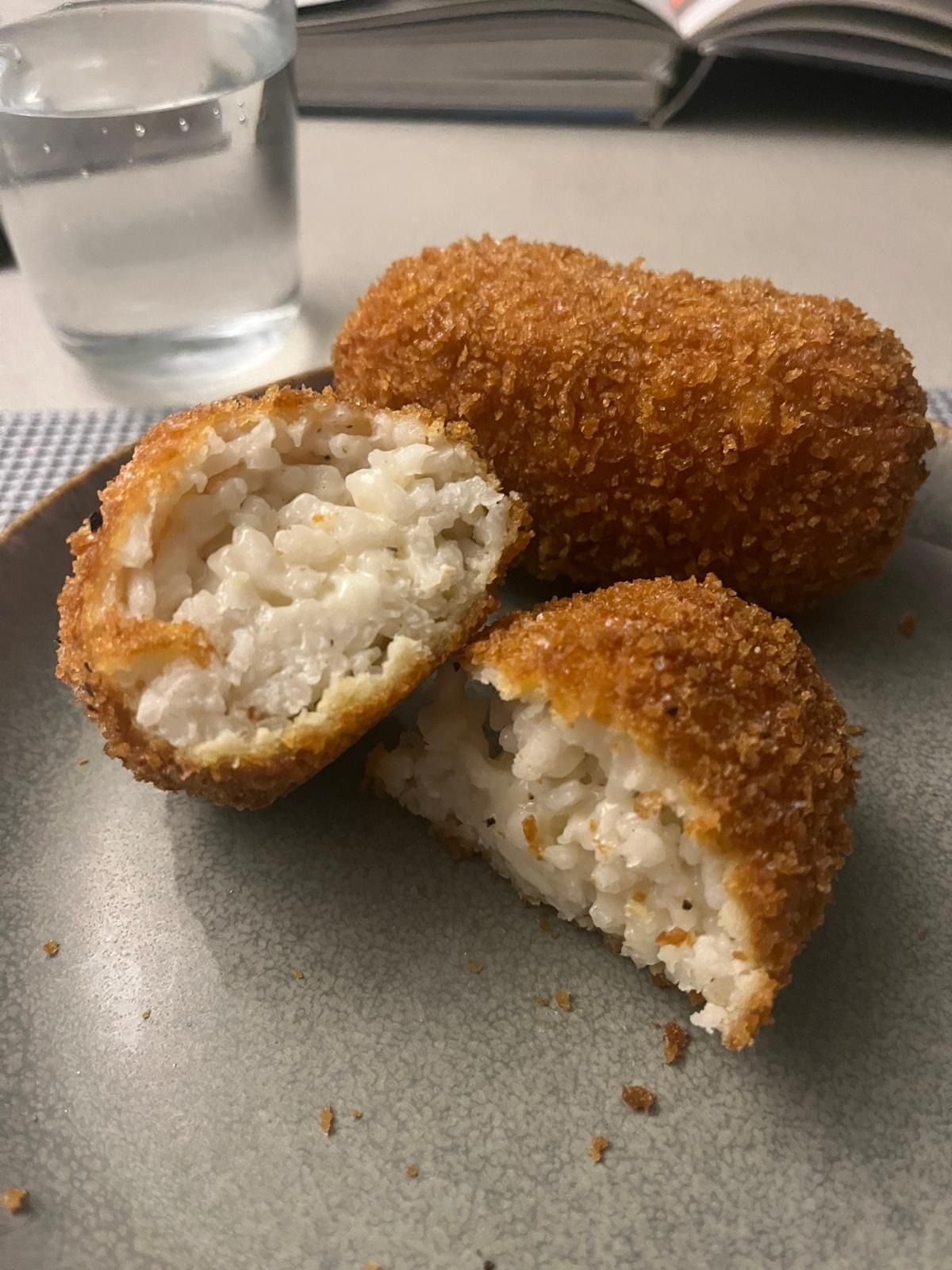
Supplì cacio e pepe
Cacio e pepe supplì
Cacio means cheese, and cacio e pepe, just Pecorino Romano and black pepper, is the simplest of Rome's four classic pastas. Roman pizzerias and fry shops have started filling supplì with those pasta flavors, and cacio e pepe now sits beside amatriciana and carbonara.
On the menu A September dinner for eight
-
Fiori di zucca fritti
Fried zucchini flowers
The zucchini is a young vegetable, bred near Milan in the 1800s, and its name first meant small dried Tuscan gourds for storing tobacco. Cooks mostly pick the male flowers, which grow on long stems, so the females can go on to become squash.
On the menu A July housewarming for twenty
-
Pane, olio e aceto
Bread with olive oil and balsamic
The bread is Roman-style, but balsamic vinegar comes from the old Duchy of Modena, where the word balsamico first shows up in the ducal cellars' records of 1747. The name probably came from its use as a remedy, said to work like a balm.
On the menu A September birthday for twelve, An October dinner for eight
Primi
-
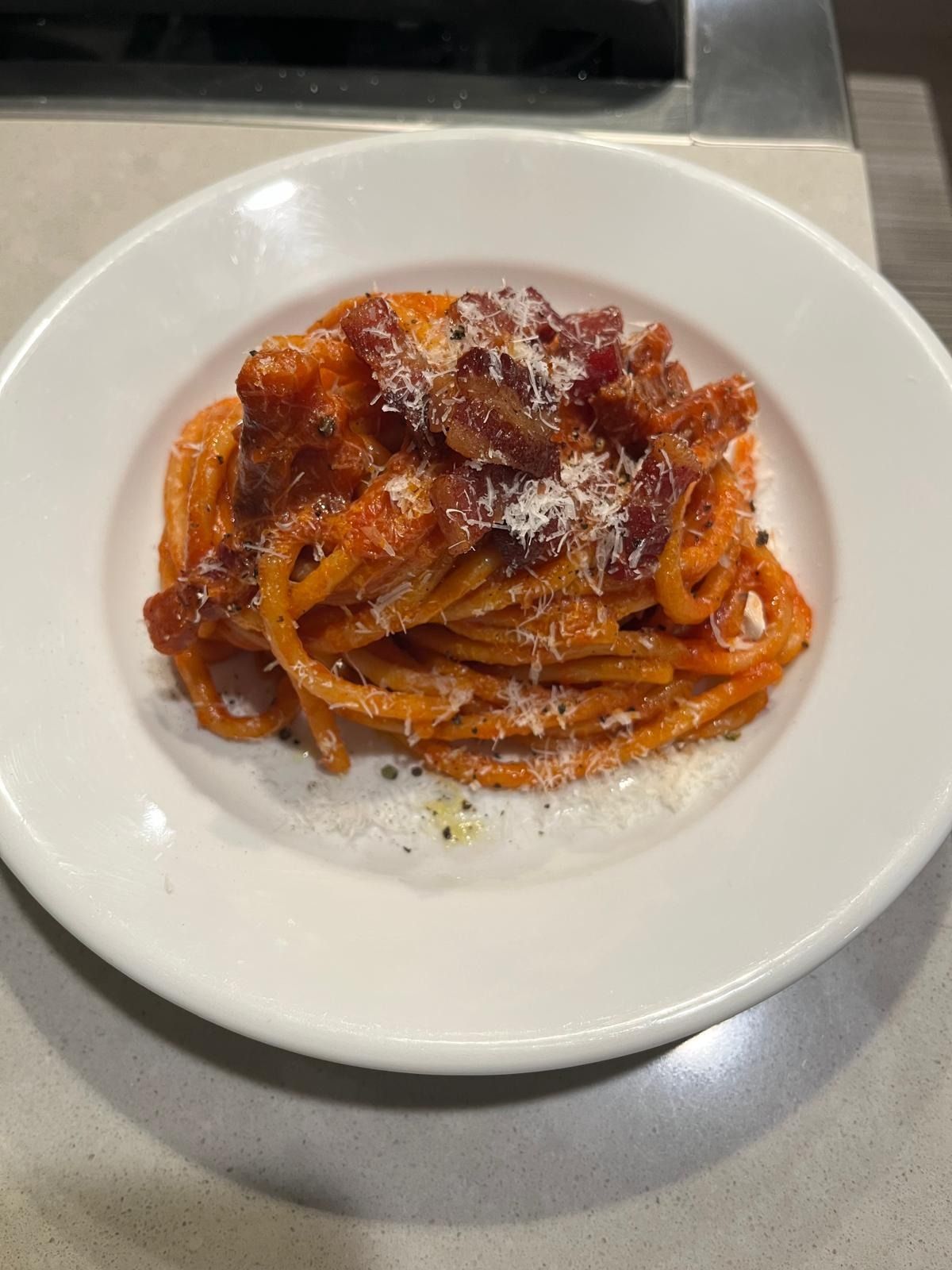
Amatriciana
Guanciale and tomato pasta
When a star chef said on Italian TV that his secret ingredient was garlic, the town of Amatrice publicly reminded him that a real amatriciana has none, and he apologized. Rome still argues about onion, but on garlic the hometown has spoken.
On the menu An October dinner for eight
-
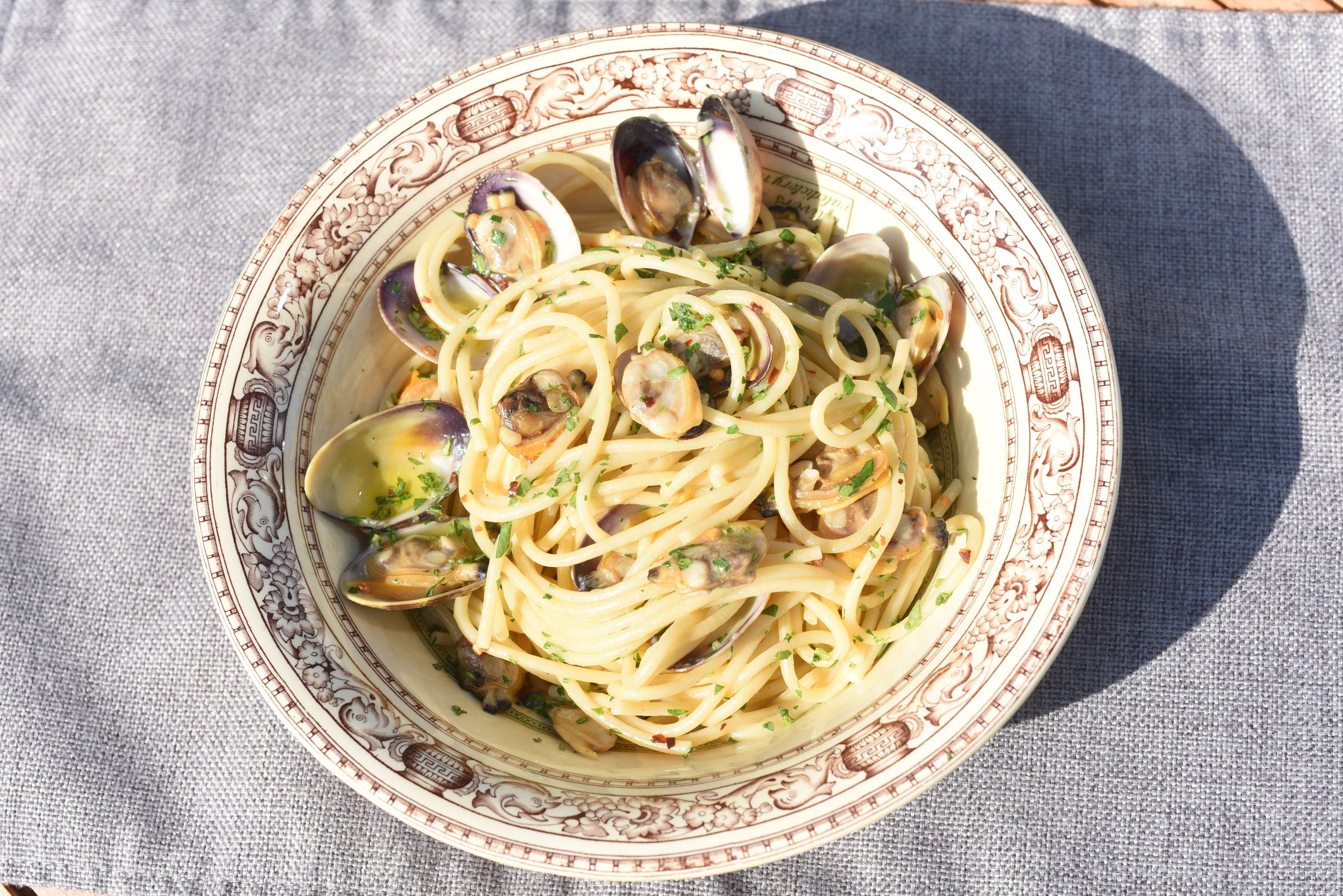
Spaghetti alle vongole
Spaghetti with clams
The word vongola is Neapolitan, from the Latin for little shell, and Naples is the dish's best-known home. Nearly all the clams farmed in Italy are Manila clams, the same species Washingtonians dig on Puget Sound beaches.
-
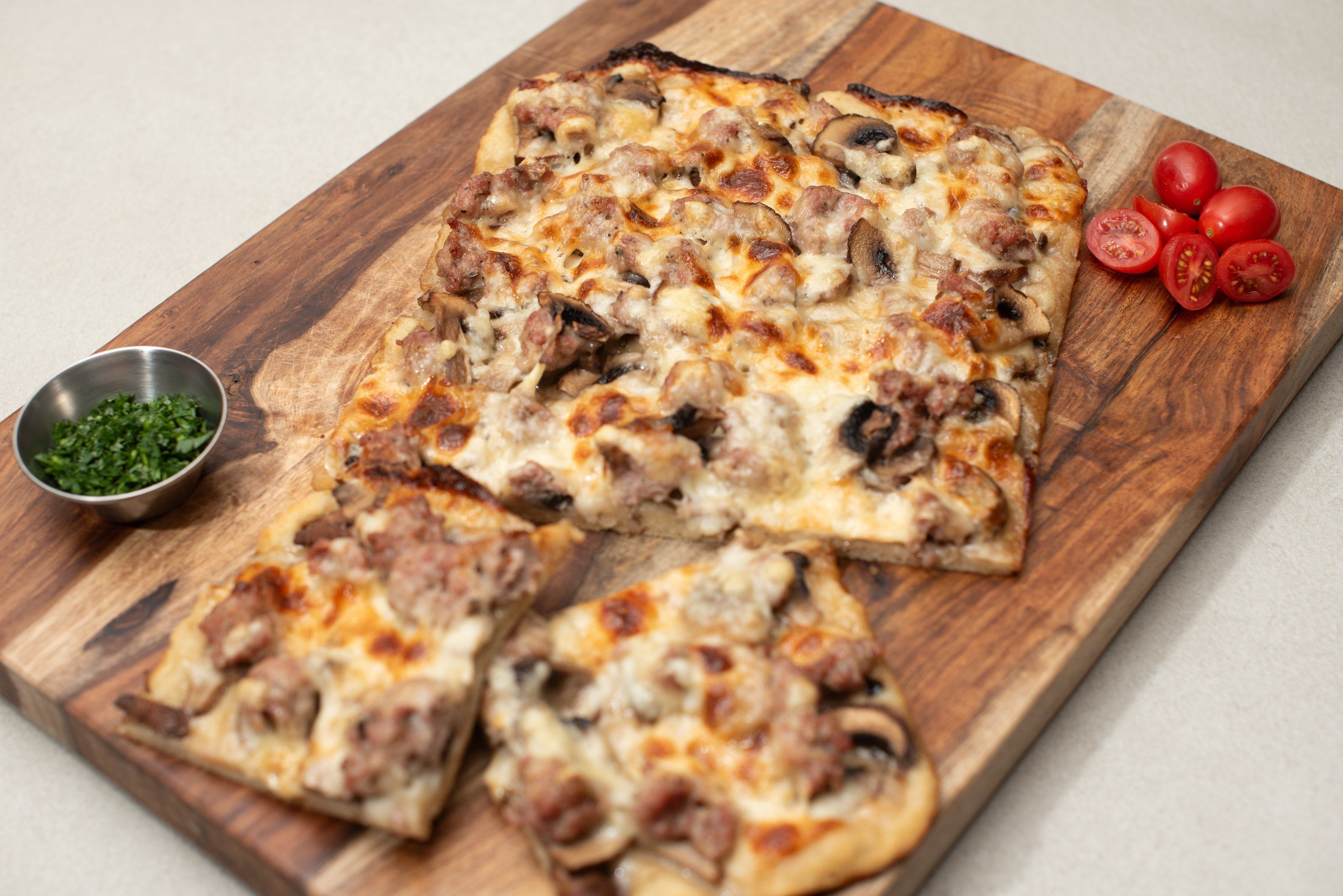
Pizza al taglio
Roman pizza by the slice
Pizza al taglio grew up in Rome's neighborhood bakeries, baked in large rectangular trays and sold by weight. You point, show how big a piece you want, and it is cut, weighed and priced, so a little of everything is the sensible order.
On the menu A July housewarming for twenty
-
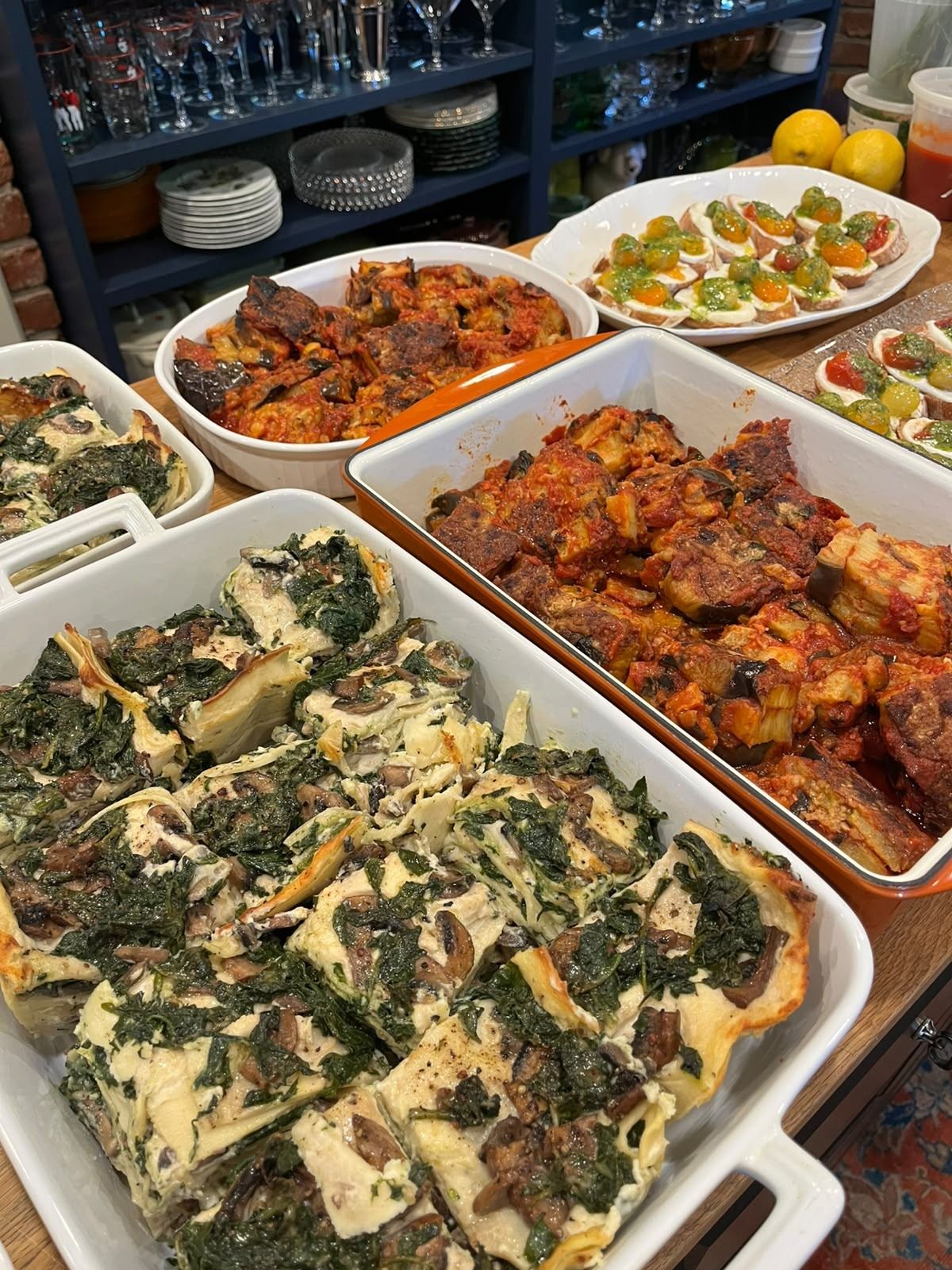
Lasagna bianca cacio e pepe
White cacio e pepe lasagna
Cacio e pepe, Rome's pasta of pecorino and black pepper, is so prone to clumping that physicists won an Ig Nobel Prize for figuring out how to keep it smooth. Here it becomes the béchamel in a modern white lasagna with mushrooms and spinach.
On the menu A birthday for twenty-four, A September birthday for twelve
-
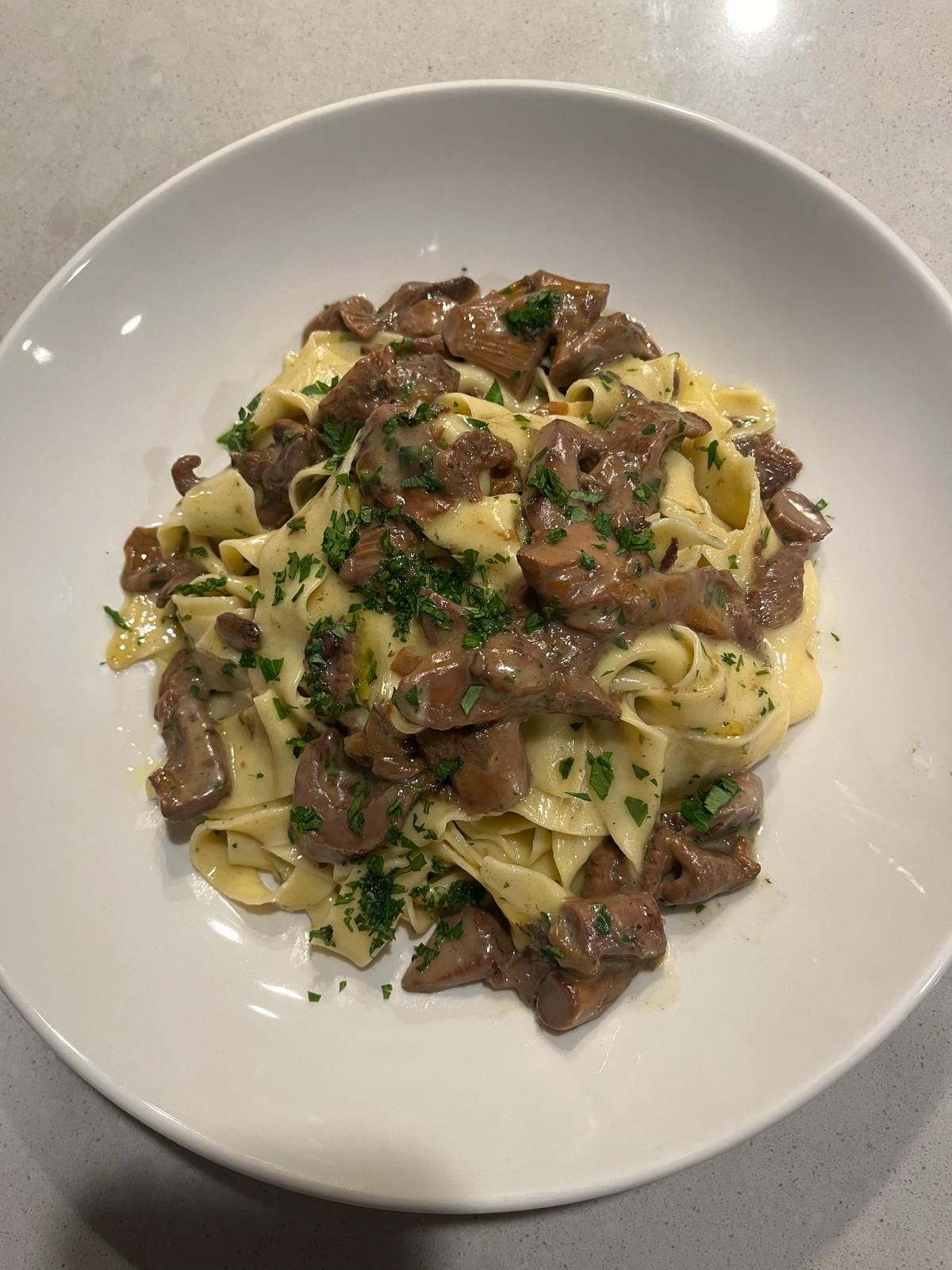
Fettuccine ai funghi
Fettuccine with mushrooms
In Rome, egg pasta much like Bologna's tagliatelle is called fettuccine, little ribbons. In the 1400s Martino da Como, cook to a cardinal in Rome, wrote a recipe for Roman macaroni: dough cut into ribbons as wide as a little finger.
-
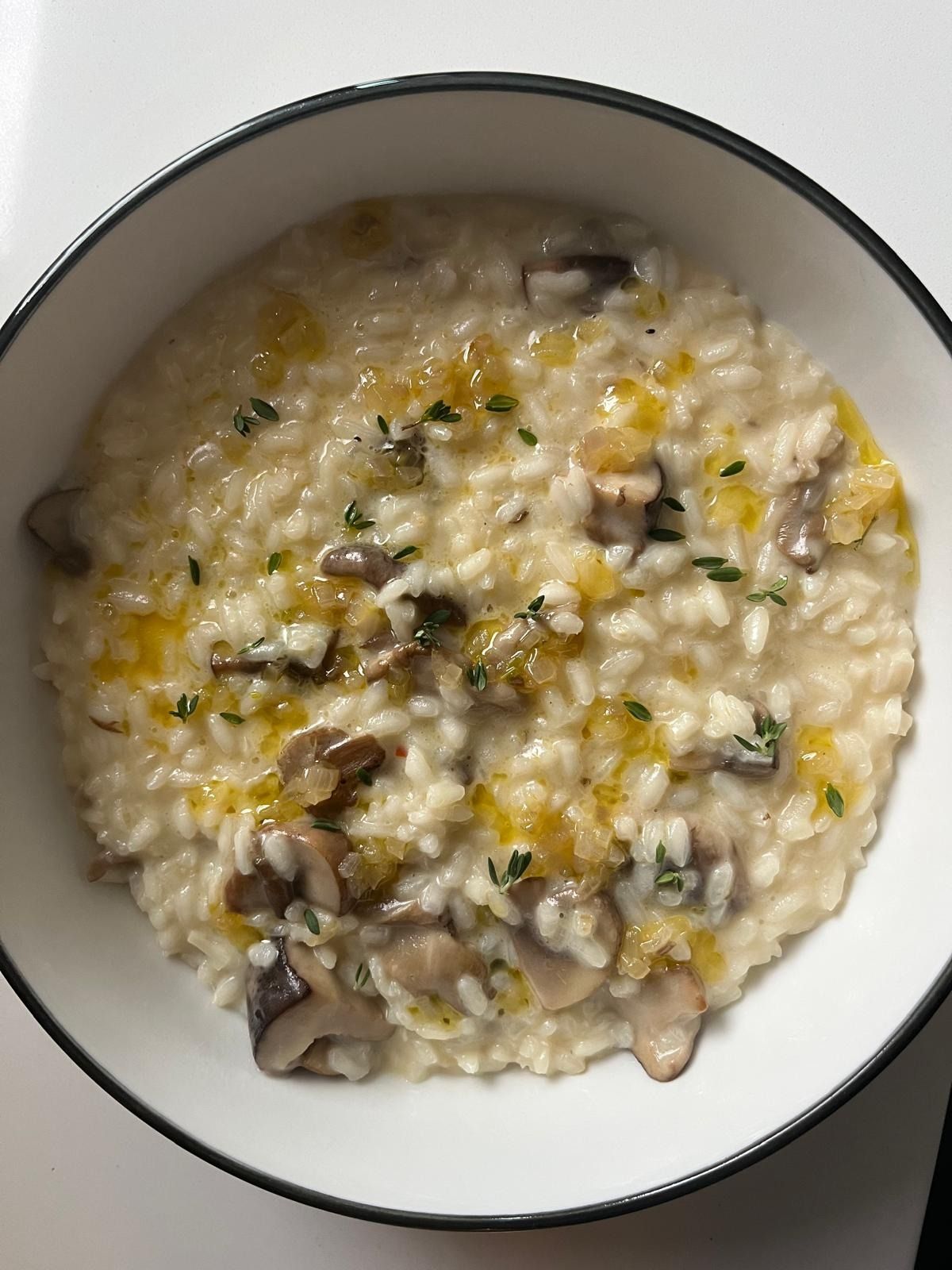
Risotto ai funghi
Mushroom risotto
Ancient Romans knew rice mostly as medicine, and in one of Horace's satires a doctor prescribes rice gruel to a miser who balks at the price. Risotto came many centuries later, from Italy's north, where rice is grown in flooded fields along the Po.
-
Gnocchi di patate
Hand-rolled potato gnocchi
Many Roman trattorias still cook by a proverb, giovedì gnocchi, venerdì pesce, sabato trippa: gnocchi on Thursday, fish on Friday, tripe on Saturday. Thursday's gnocchi were a filling meal before Friday, when Catholic custom kept meat off the table.
On the menu A September dinner for eight
Secondi
-
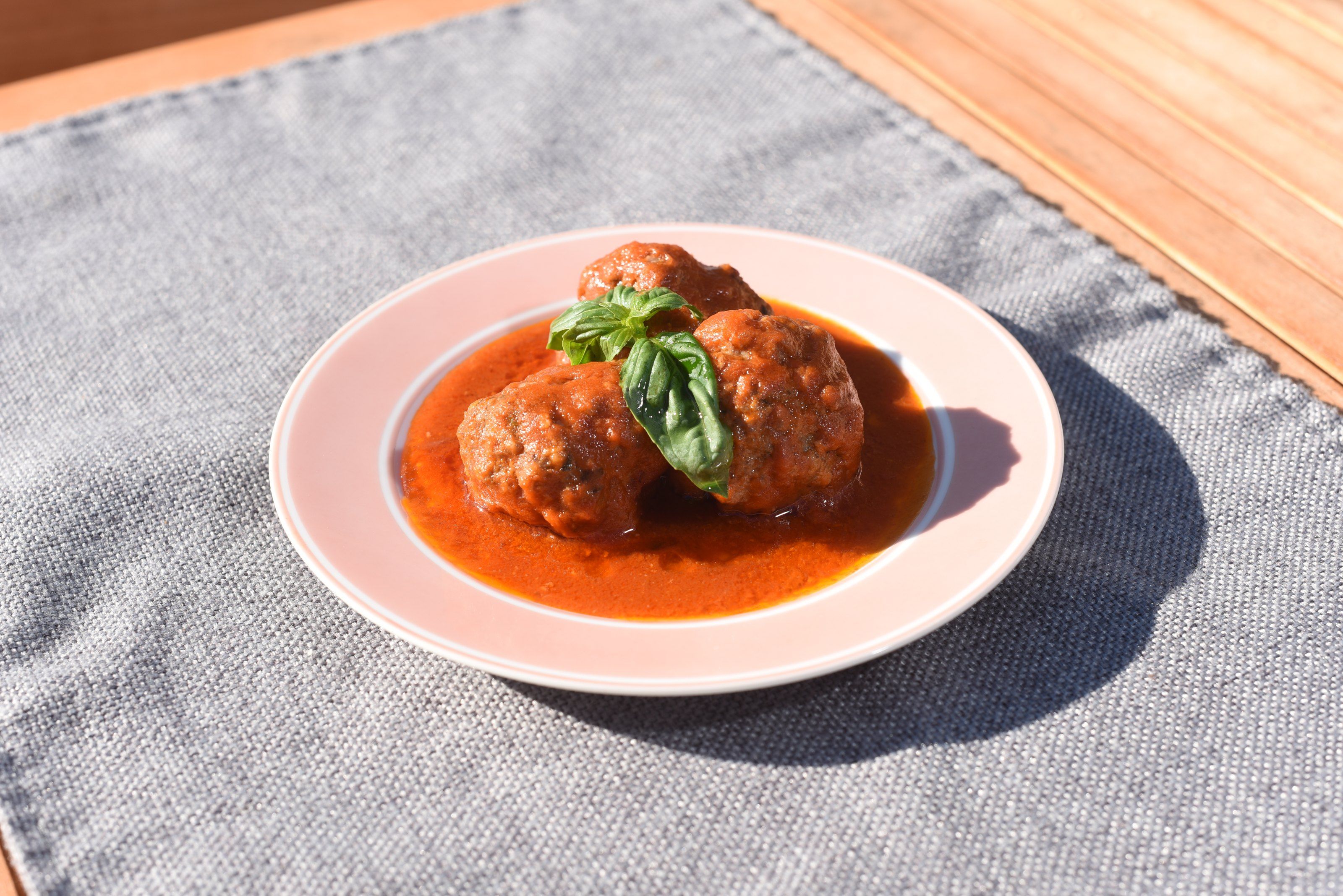
Polpette al sugo
Meatballs in tomato sauce
Italy's classic 1891 cookbook opens its meatball recipe by joking that everyone can make them, starting with the donkey. In Italy they are a course of their own, and spaghetti and meatballs on one plate is an Italian-American idea.
On the menu A July housewarming for twenty
-
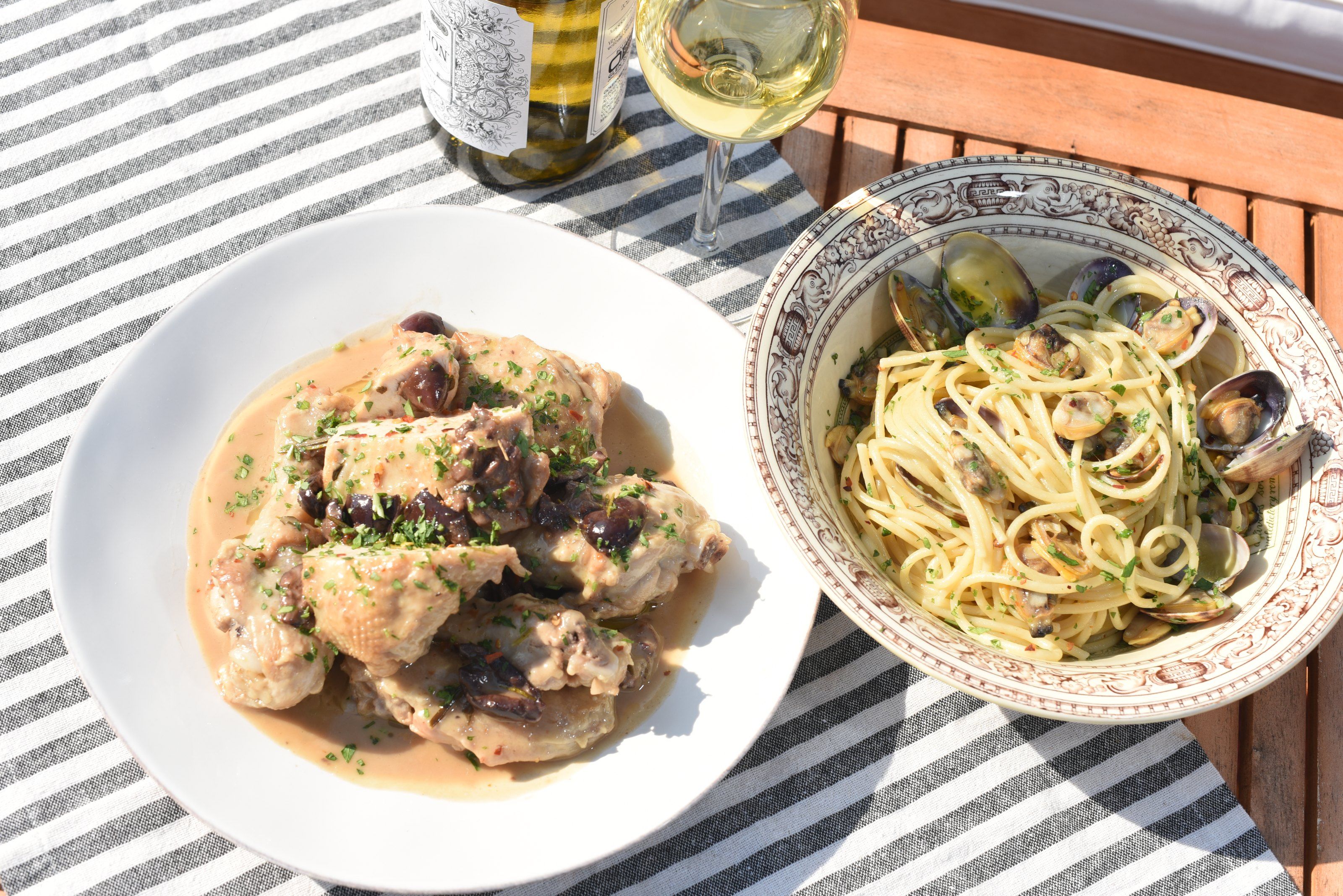
Pollo alla cacciatora
Roman hunter's-style chicken
Alla cacciatora means hunter's style, and the Roman version skips the tomato sauce of Italian-American cacciatore. White wine, vinegar, garlic and herbs do the work instead, with an anchovy melted in until it disappears into the sauce.
On the menu An October dinner for eight
-
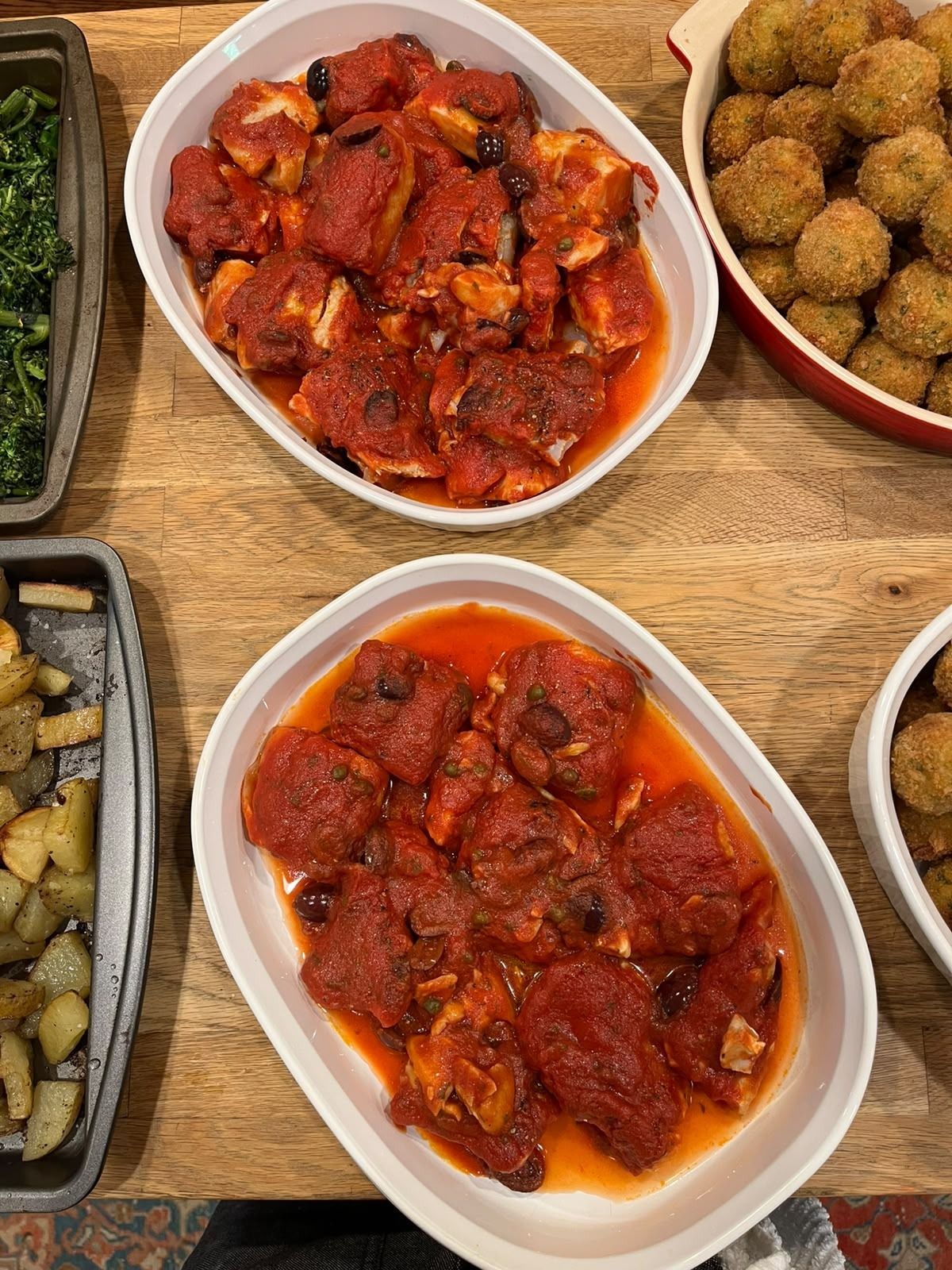
Merluzzo alla romana
Roman-style North Pacific cod
Baccalà alla romana, a Roman classic, is salt cod soaked for days and then cooked in tomato sauce. Italy's official list of fish names calls North Pacific cod baccalà once it is salted and cured, and this version uses it fresh.
On the menu A birthday for twenty-four
-
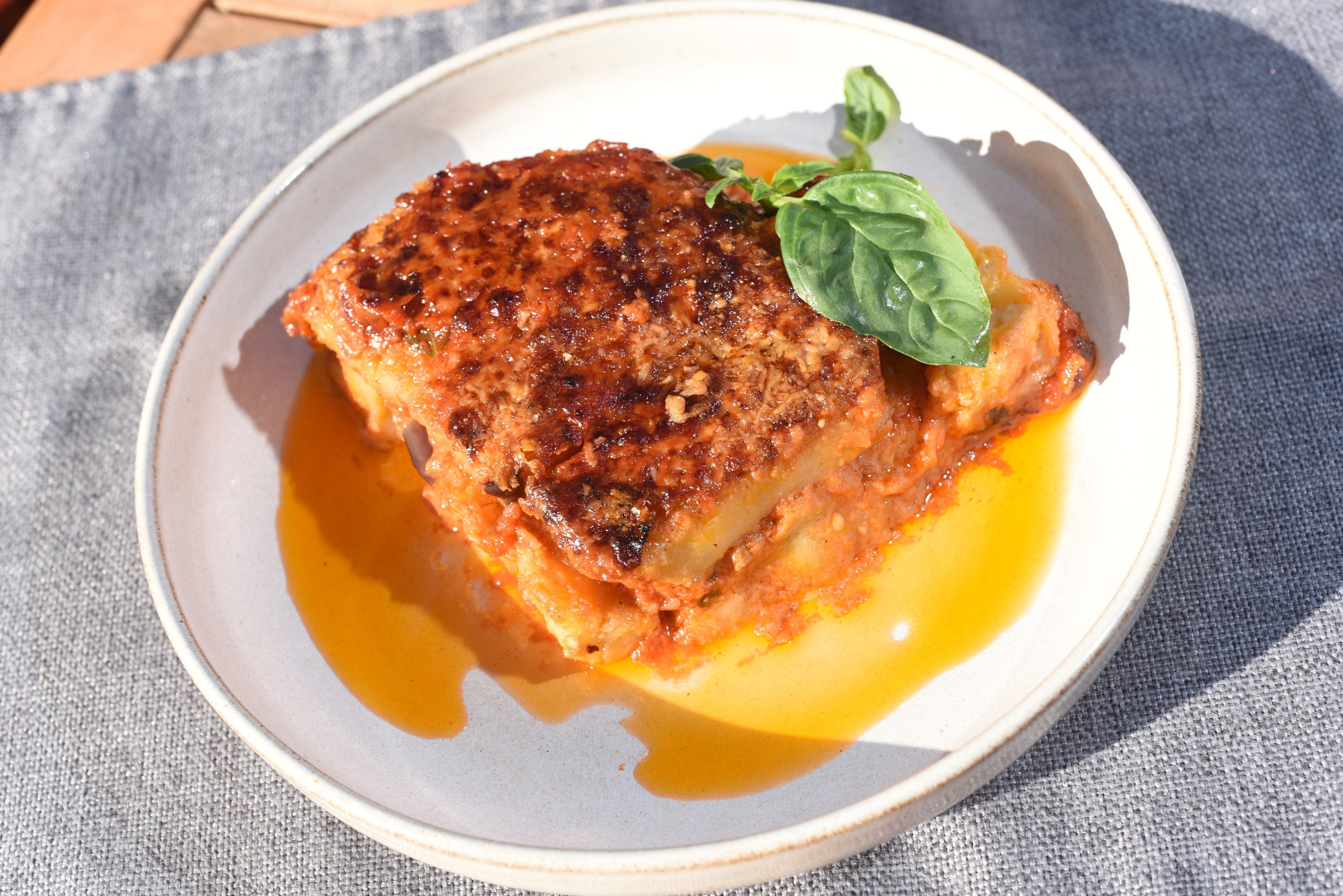
Parmigiana di melanzane
Eggplant parmigiana
One theory says the name has nothing to do with Parma: in Sicily the word also meant a window shutter, its slats overlapping like layers of fried eggplant in the pan. Naples and Sicily both claim the dish, and the question is still open.
On the menu A birthday for twenty-four
-
Guancia brasata
Red-wine braised beef cheek
Cheek is the muscle a cow chews its cud with, so it is sinewy and needs long, slow braising, here in red wine, to turn tender. Cooks long classed it as offal, alongside oxtail, the cut behind Rome's coda alla vaccinara.
On the menu A September dinner for eight
Contorni
-
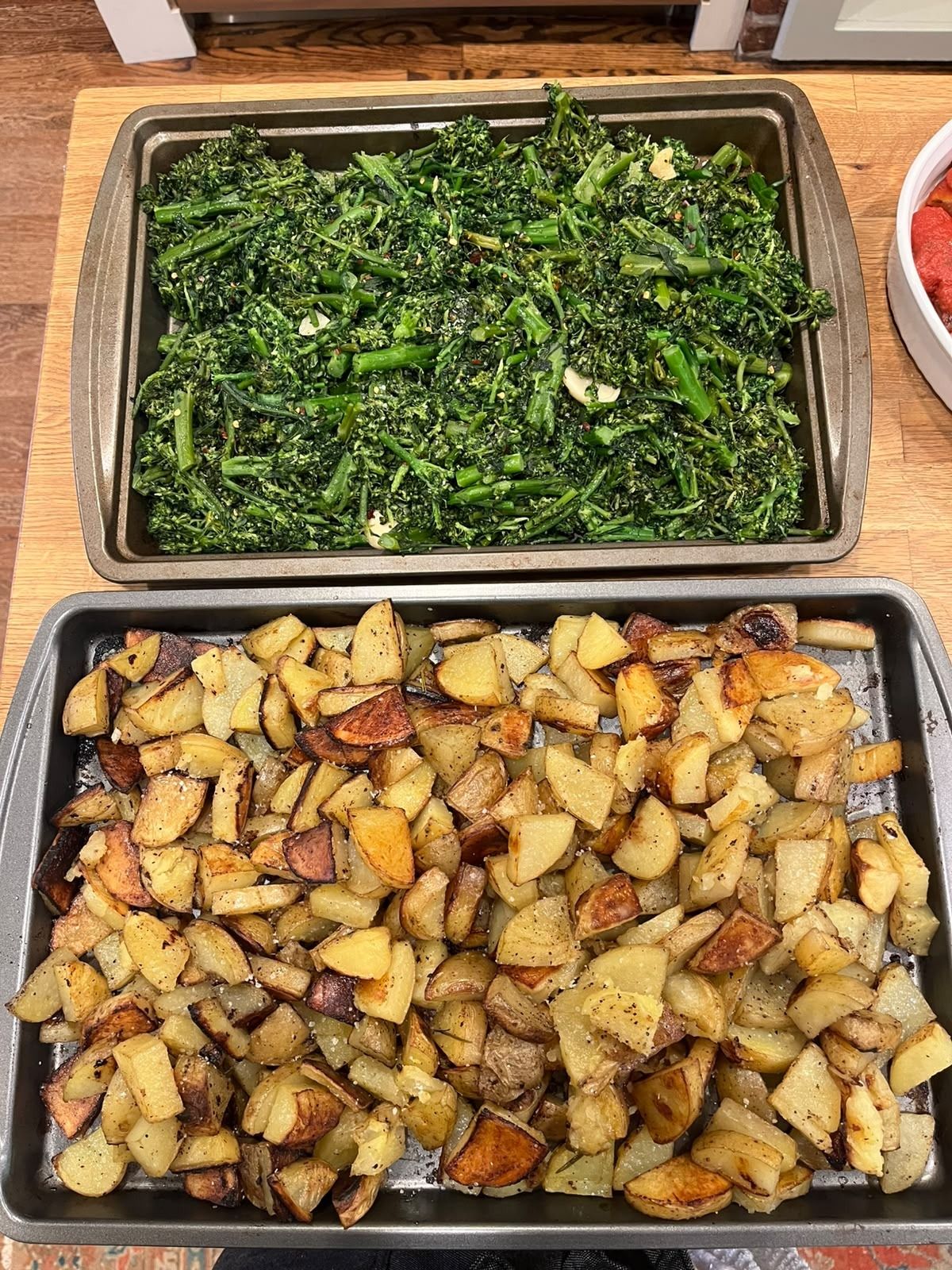
Broccolini ripassati
Sautéed broccolini
Ripassati means passed again: Roman trattorias boil greens like chicory, then pass them through a pan of olive oil, garlic and chili. Broccolini are a modern cross of broccoli and Chinese gai lan, bred in Japan and named in California in 1998.
On the menu A birthday for twenty-four, A September dinner for eight
-
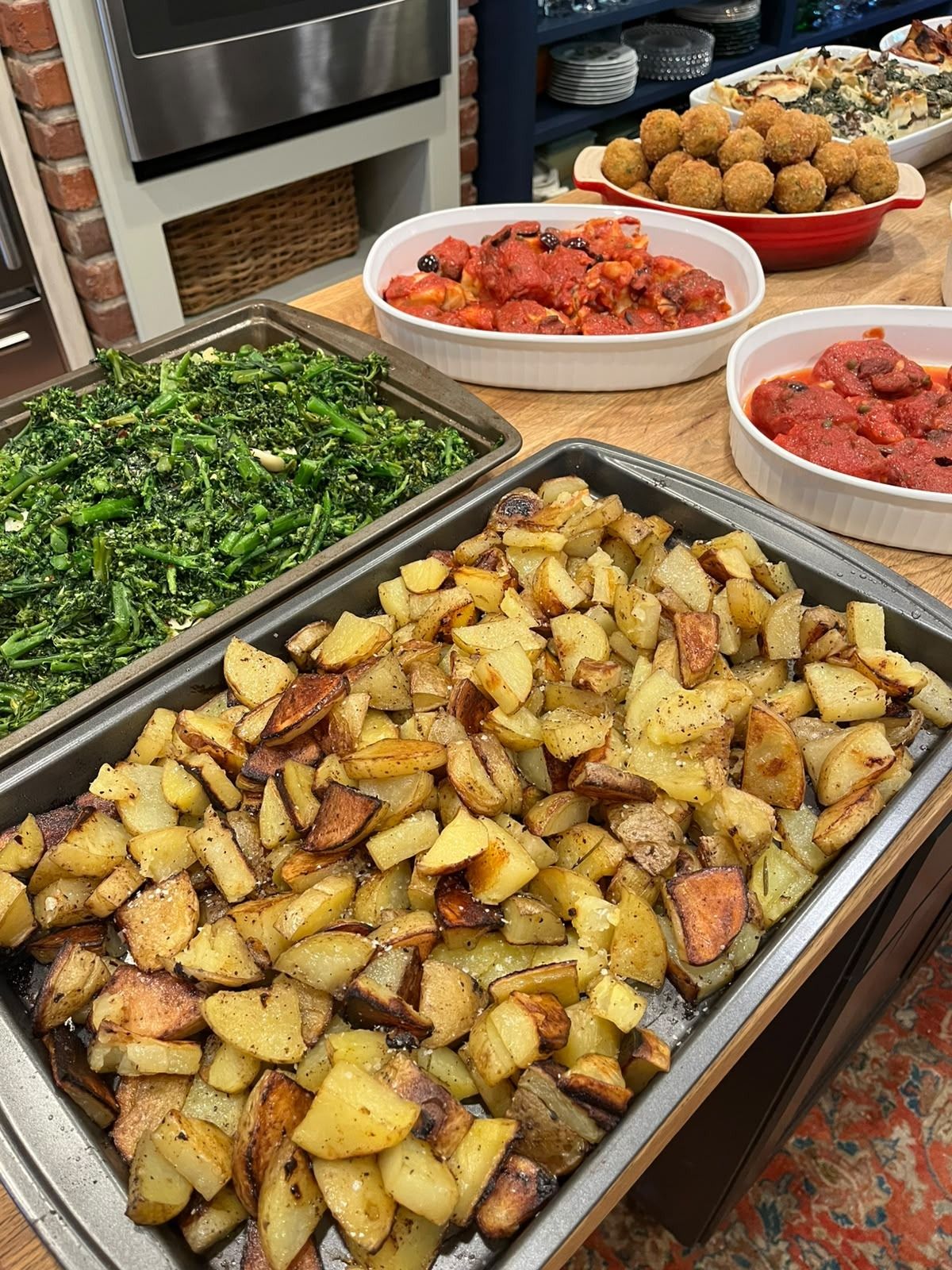
Patate al forno
Oven-roasted potatoes
Italians long called potatoes tartufoli, after the truffles they resemble, and the name crossed the Alps to become the German Kartoffel. In Rome roast potatoes are the usual partner for abbacchio, the Easter lamb.
On the menu A birthday for twenty-four, An October dinner for eight
-
Fagiolini in agro
Green beans in lemon and olive oil
Green beans came to Europe from the Americas in the 1500s and borrowed an old Latin bean name, phaseolus, which became fagiolo. Agro means sour, from the Latin acer, and Italy's Treccani dictionary uses fagiolini all'agro to illustrate the word.
On the menu A September birthday for twelve
-
Insalata verde
Green salad
The word insalata comes from insalare, to salt, and an Italian proverb sets out the dressing: well salted, a little vinegar, plenty of oil. Some versions add that a madman should toss it, and here a touch of maple syrup joins in.
On the menu A September birthday for twelve, An October dinner for eight
Dolci
-
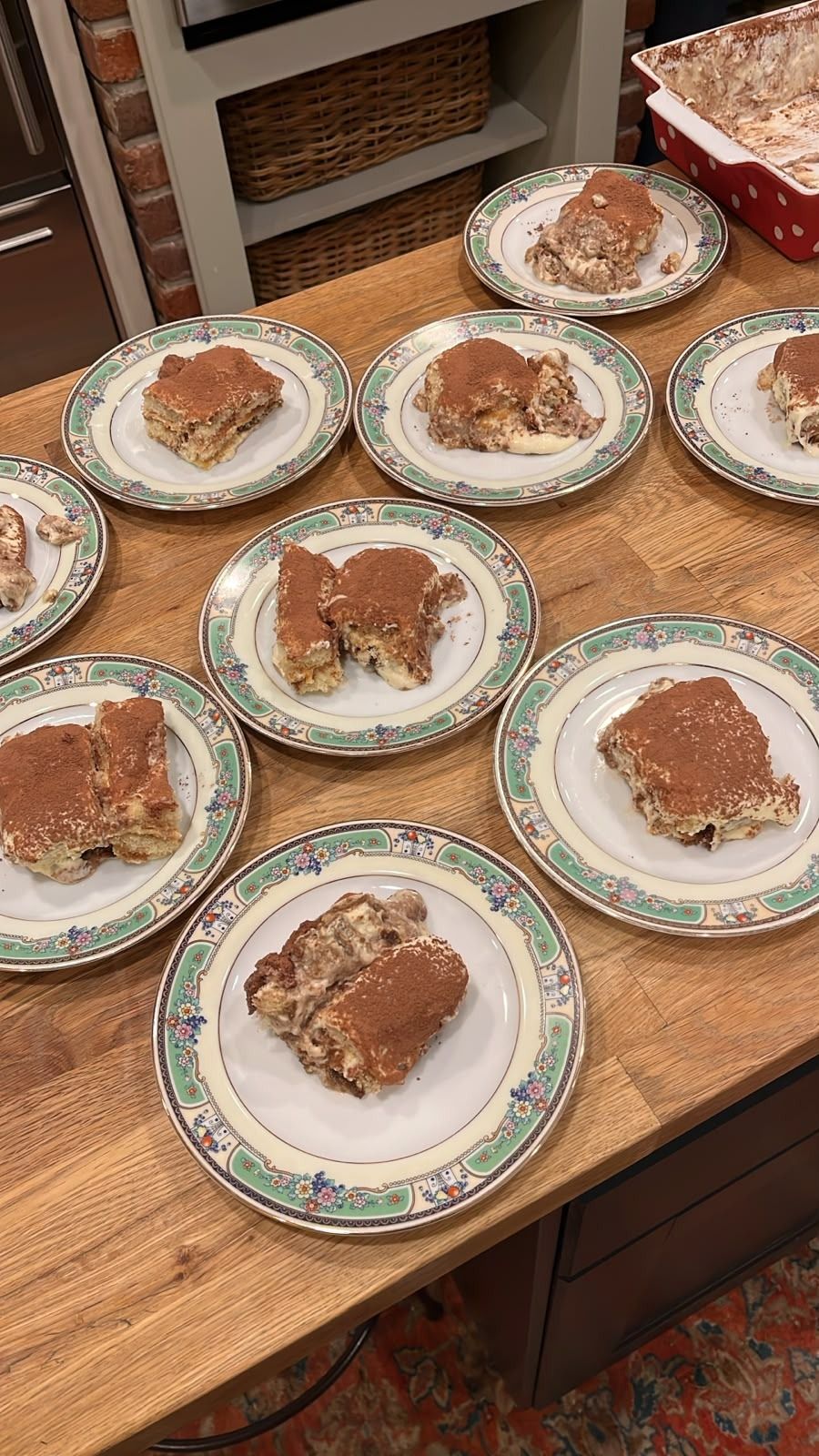
Tiramisù
Coffee and mascarpone dessert
Tiramisù means pick me up, and it is not Roman: Veneto and Friuli Venezia Giulia have spent years arguing over which of them invented it. Italy's official list of traditional foods now names it under both, which is one way to keep the peace.
On the menu A birthday for twenty-four, A September birthday for twelve, A September dinner for eight
-
Torta della nonna
Grandmother's custard tart
The name promises a grandmother, but the story usually told credits a Tuscan restaurant cook who invented it for regulars bored with the dessert list. Custard under pine nuts did the trick, and Italian restaurants have kept it ever since.
On the menu An October dinner for eight
-
Cantucci
Tuscan almond biscotti
In Italian, biscotti can mean any cookie, and Tuscans call these cantucci, after the crusty end of a loaf, or biscotti di Prato, after the city they come from. They are often eaten dipped in vin santo, a Tuscan dessert wine.
On the menu A July housewarming for twenty
The stories are drawn from published sources, among them Treccani, the Accademia Italiana della Cucina and Turismo Roma.
A Roman menu for your table
Every menu is written for one table. Nico plans it with you around the season, your guests and any dietary needs, and the proposal lists the allergens of each dish.
The food of Rome: what people ask
Anything else? Write to Nicholas@NicosDining.com.
Plan a Roman dinnerIs there an Italian private chef in Seattle?
Yes. Nico's Dining is a private chef service in Seattle run by Nicholas Olson, a chef born and trained in Rome. He cooks Roman dinners in clients' homes for 2 to 10 guests, and events for 11 to 24.
Is Roman food different from Italian food?
Roman cooking is one of Italy's regional cuisines. Some dishes are Roman through and through, like supplì and amatriciana; others come from elsewhere in Italy, like tiramisù. The dish stories above say which is which.
Is Nico Italian?
Nicholas Olson is an Italian-American chef, born and trained in Rome. He trained at A Tavola con lo Chef, then cooked at Ristorante Pianoalto and The American Academy in Rome. More in his story.
Can I ask for dishes that aren't Roman?
Yes, tell Nico what you have in mind. Roman cooking is the heart of every menu, and some favourites on this year's menus come from other parts of Italy, like tiramisù and eggplant parmigiana. When a party calls for something else, Nico cooks that too: for a baby shower, tacos, Mexican appetizers and churros (the host's note).
Is the pasta made by hand?
Often. On this year's menus, the pasta for the amatriciana was made by hand and the potato gnocchi were rolled by hand.
Plan a Roman dinner at home
Send me the date, the number of guests and what you're celebrating. I'll reply with a few questions or a first menu.
- Nicholas@NicosDining.com
- Where
- Your home, in Seattle and the surrounding area